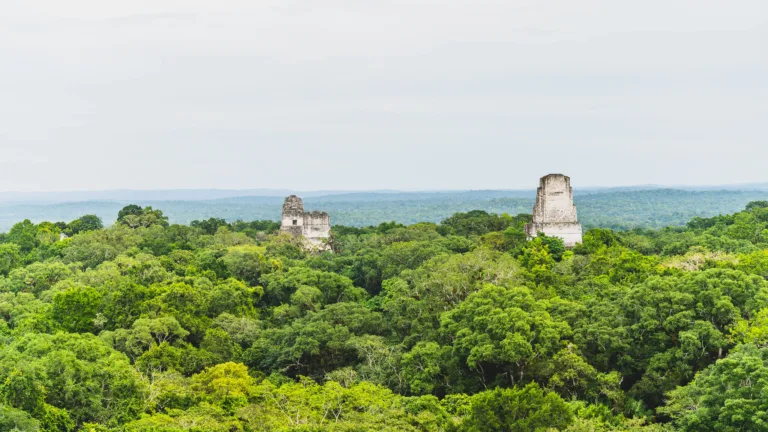
Acatenango Overnight 4X4 Tour: Best Way to See Fuego Volcano
If you’ve been researching the famous Acatenango hike in Guatemala, you’ve probably come across two things – it’s one of the most unforgettable experiences in Central America… and it’s also incredibly tough.
Most people do it for one reason – to see Fuego Volcano erupt at night and getting there usually means committing to a 5–6 hour steep uphill hike one way, often at high altitude.
But what if I told you there’s a way to experience Acatenango without hiking the entire way?
On my recent trip to Guatemala, I discovered an alternative that completely changed the game – the Acatenango overnight 4×4 tour. Instead of doing the full 5–6 hour hike, I took a 4×4 vehicle most of the way up and only hiked the final stretch to base camp.
And the best part? I still got front-row views of the Fuego Volcano erupting all night.
This experience turned out to be the absolute highlight of my Guatemala trip, and honestly, one of the most surreal things I’ve ever done. Watching an active volcano erupt under a full moon, sipping hot chocolate at base camp, and waking up above the clouds… it felt unreal.
If you’ve been eyeing Acatenango but quietly wondering whether the full hike is necessary – it isn’t.
In this blog, I’m sharing everything you need to know about the Acatenango overnight tour with a 4×4 option, including a full breakdown of the experience, what to pack, whether it’s worth it, and practical tips to help you plan your trip.
Affiliate Disclosure: This post may contain affiliate links, which means I may receive a commission if you make a purchase through the links provided, at no additional cost to you. See our Privacy Policy for more information.
Full Breakdown & Timeline of the Acatenango overnight 4×4 Tour
One of the biggest questions I had before booking this experience was – what does the Acatenango overnight tour actually look like? If you’re considering this, especially the Acatenango 4×4 tour, knowing the exact flow makes a huge difference. So here’s a complete breakdown of what the experience looks like from start to finish.
Starting from Antigua
Your journey to the Acatenango hike begins in Antigua, the base for most overnight tours. Almost all tour operators — including Trek Guatemala, who I booked with — require a pre-hike orientation the evening before your departure, and it’s something you genuinely shouldn’t skip.
Mine covered the exact route, current trail conditions, what to expect from the altitude, and a detailed packing checklist. I found it especially helpful because it set realistic expectations and made the experience feel far less daunting going in.
The next day, the Acatenango 4×4 tour typically begins around 12:00 PM. Mostly, you’ll meet your group and guide about 15 minutes before departure.
Even though this is an Acatenango 4×4 tour, it’s still important to fuel up because there is a hiking portion involved. Make sure you eat a proper meal, stay hydrated, and pace yourself. You’ll need that energy not just for the hike, but for the long evening ahead waiting to see Volcán de Fuego erupt.
Hop into a 4×4 vehicle
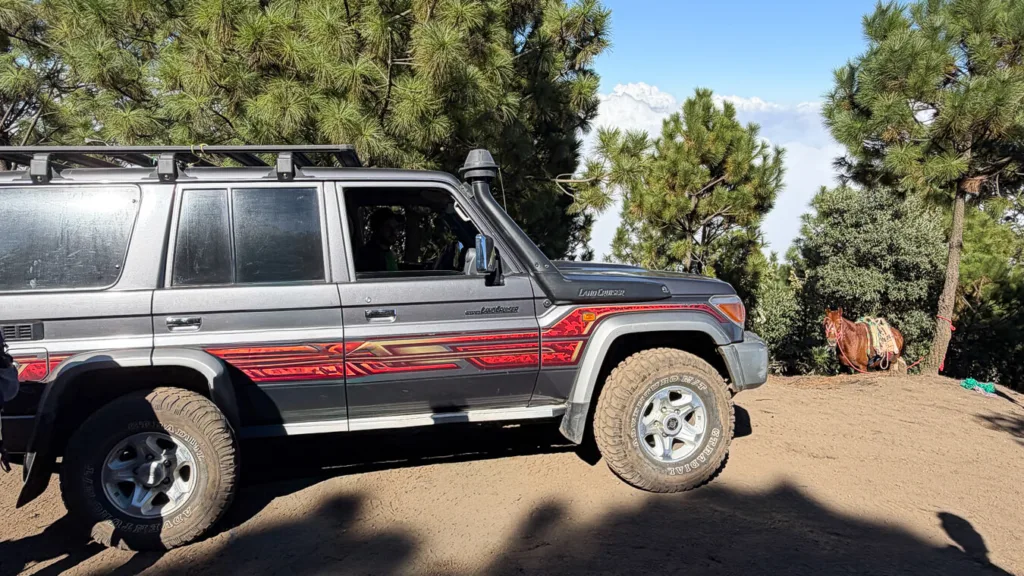
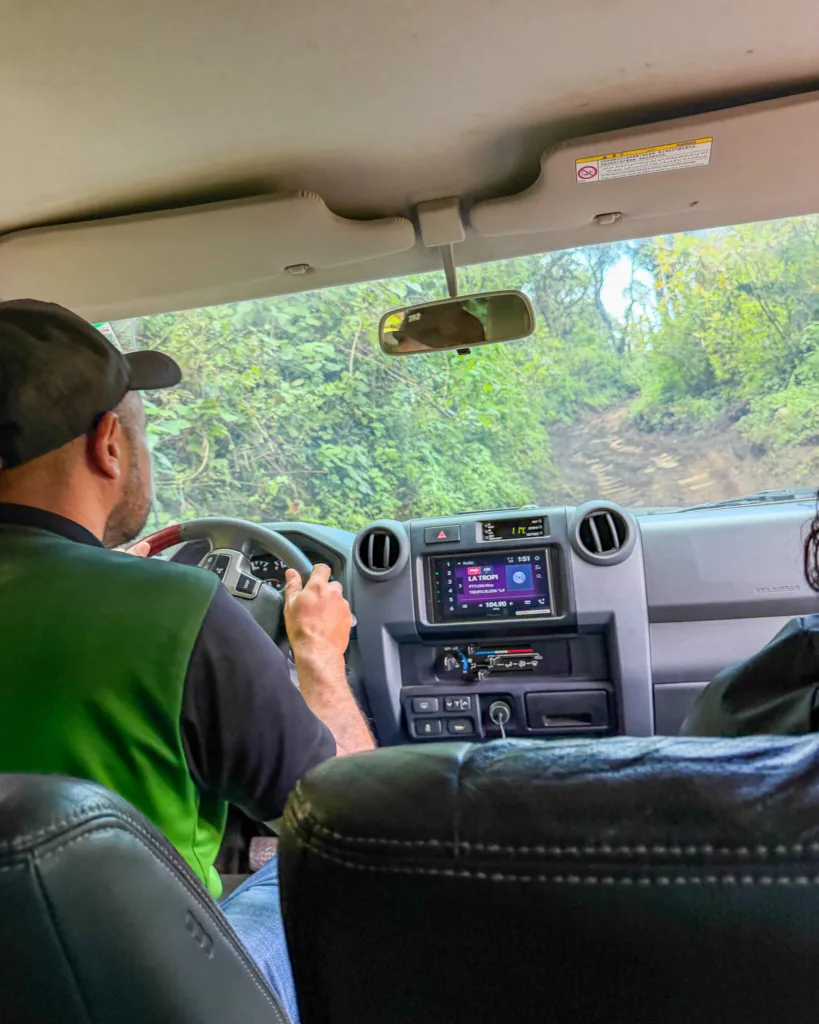
You hop into a 4×4 vehicle that takes you up most of the volcano. This part of the experience is honestly underrated and adds a whole different level of adventure. The road is steep, rocky, and full of sharp turns, and at times it feels like you’re driving straight up the mountain. It’s thrilling, a little intense, but completely worth it.
The Journey to the basecamp
The first leg of the journey is a one-hour drive from Antigua to the national park registration area. It is a smooth enough drive, and watching the city give way to farmland and then to mountain roads is its own quiet pleasure.
About an hour in, you’ll stop at the official park registration point. It resembles a small ranger station — simple, but clearly organized, where staff handle all entries into the park.
You’ll need to show your passport, or at the very least a clear photo of the front page on your phone. From what I observed, having a digital copy works perfectly fine, but make sure it’s easily accessible. You’ll then fill out a short form with basic details before being officially registered for the Acatenango hike.
After registration, the real adventure begins. We hopped back into our 4×4 vehicle for the next section — and this part is easily one of the most exciting. The terrain quickly becomes steep, rugged, and unpredictable, cutting through different vegetation zones as you climb higher. At times, it genuinely feels like you’re driving straight up the volcano.
That said, having an experienced driver makes all the difference. Ours handled the route with impressive control, which made the ride feel thrilling but still safe.
The Hike to Base Camp (The final stretch)
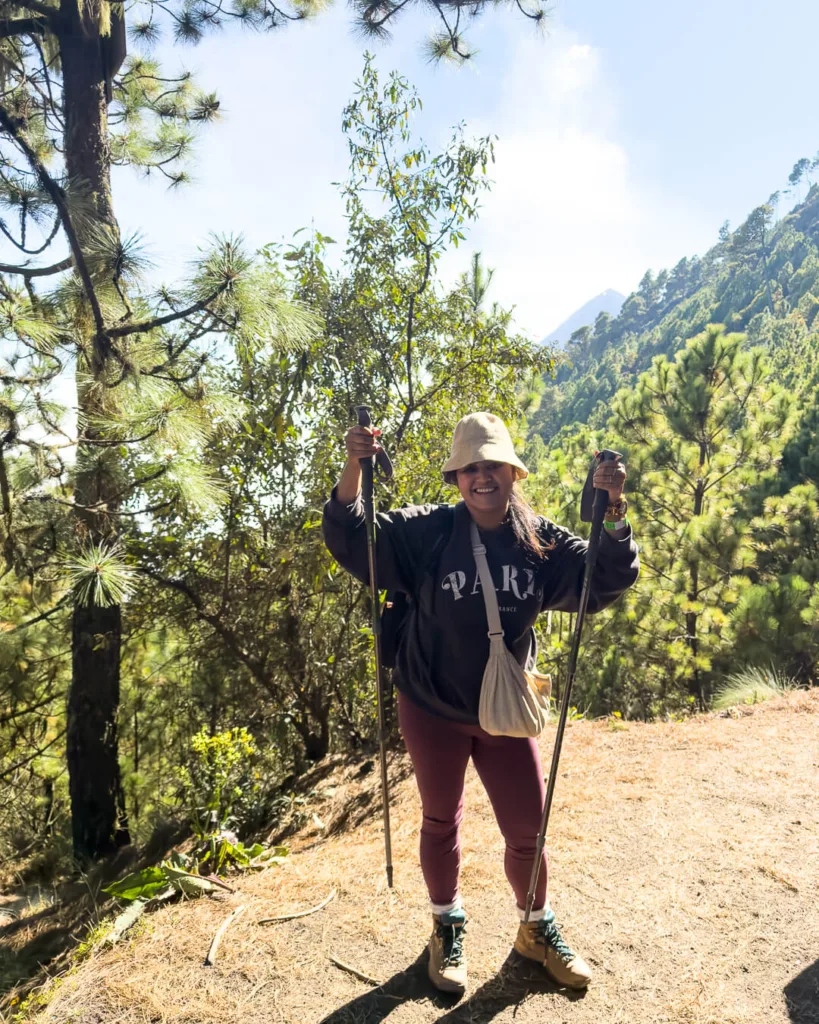
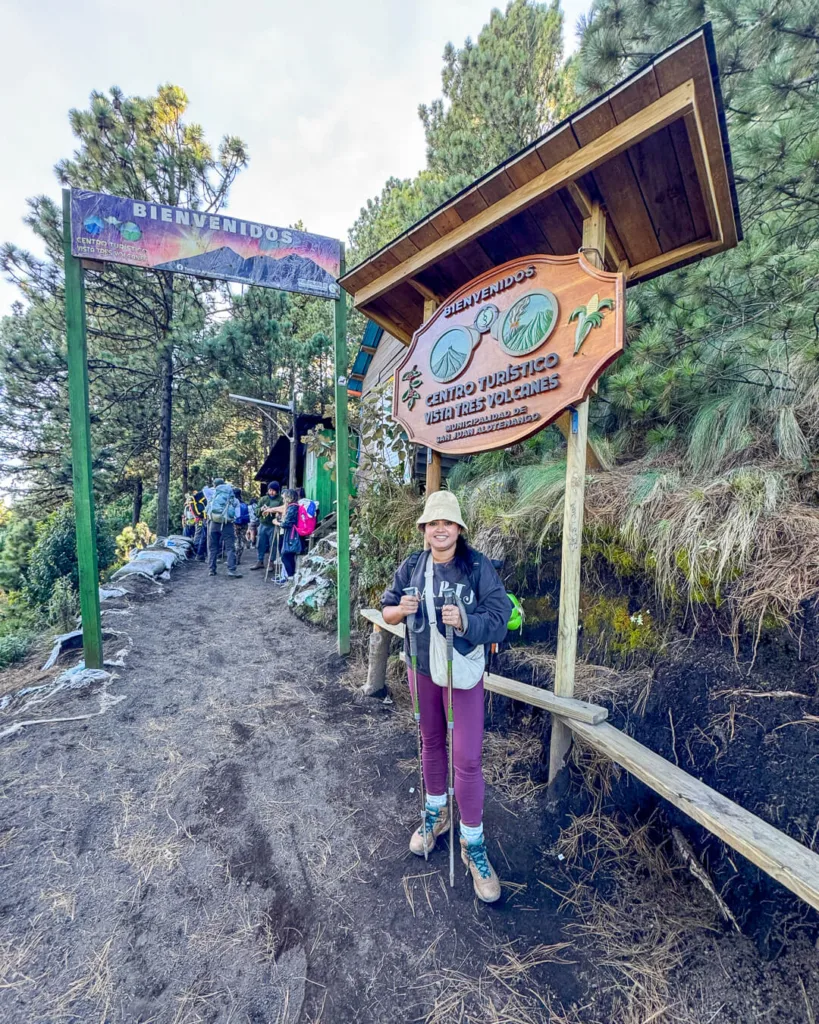
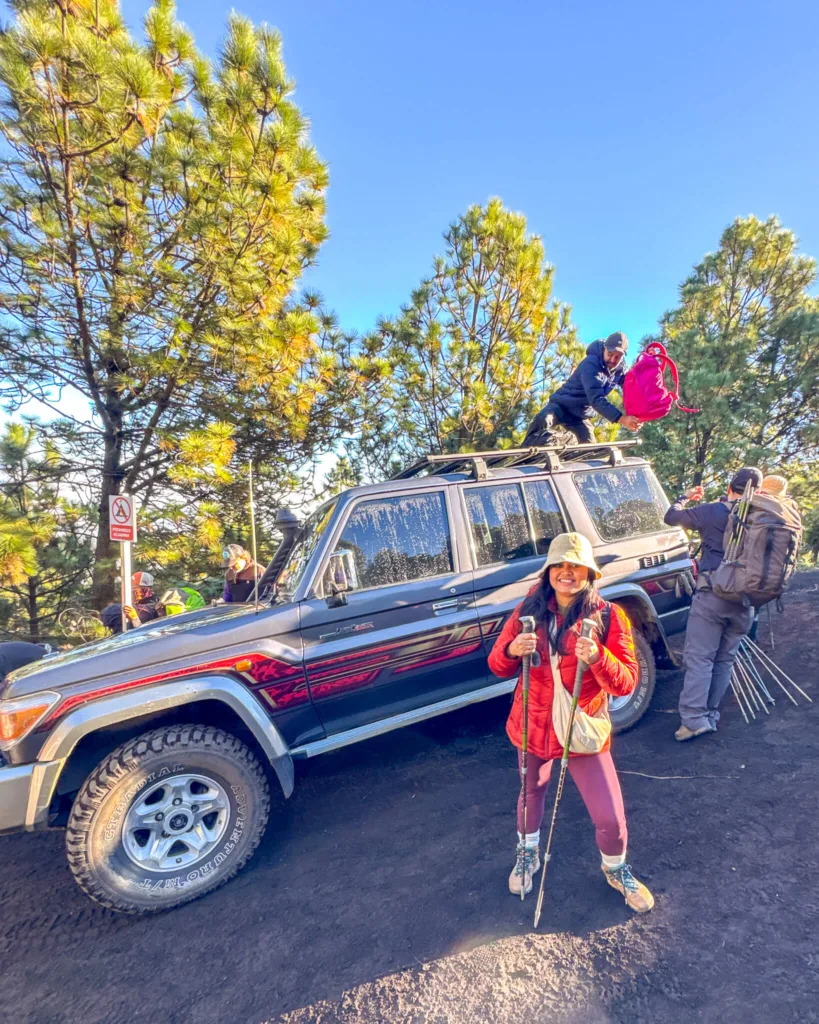
After the 4×4 ride, we reached the point where vehicles stop, and from there began the final stretch — about a one-hour hike to base camp. While it’s still uphill, it’s very manageable compared to the full Acatenango hike.
For most of this section, the trail winds through forested terrain on a steady, well-defined path. It’s not overly steep, but it’s not flat either — a consistent incline that keeps you working without feeling overwhelming. From my experience, what really makes it feel harder is the altitude. Even though the gradient isn’t extreme, your lungs notice the difference. We kept a slow, steady pace, taking short breaks whenever needed.
The final stretch before base camp gets a bit steeper. Just enough to remind you that you’re climbing a volcano. It’s not exhausting, but you’ll definitely feel the effort more here.
We reached base camp around 4:00 PM, and this is where the entire experience comes together.
My Basecamp experience
The campsite itself is simple, but honestly perfect for this kind of adventure. We stayed in a basic private tent setup, with beds and sleeping bags already arranged, which made things much more comfortable than expected after the hike.
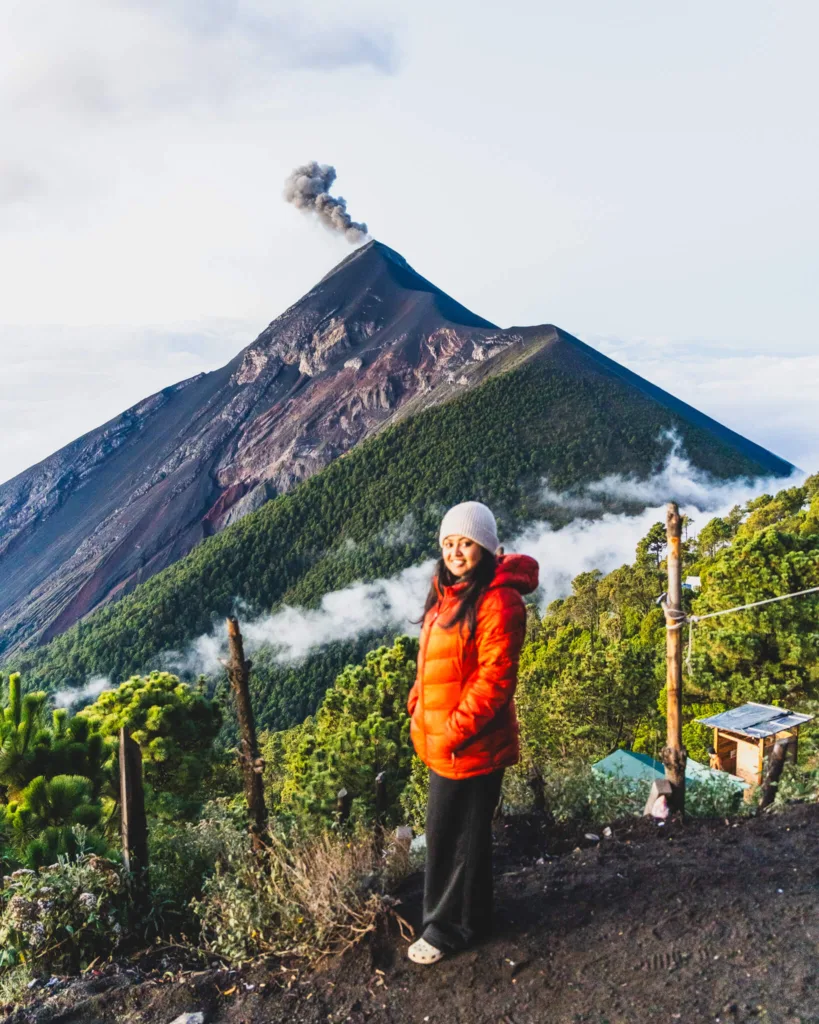
What really stood out was the balcony-style viewing area right in front of the tents, offering uninterrupted views of Volcán de Fuego. You could literally sit there and watch eruptions without having to move, which is exactly what makes this experience so unique.
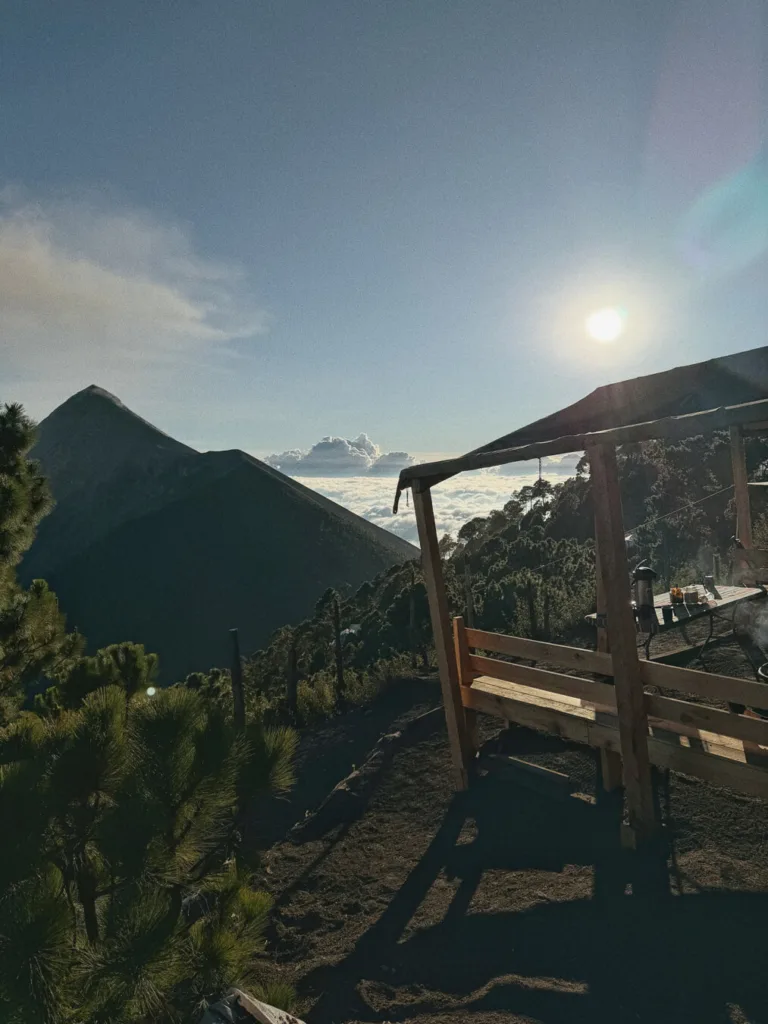
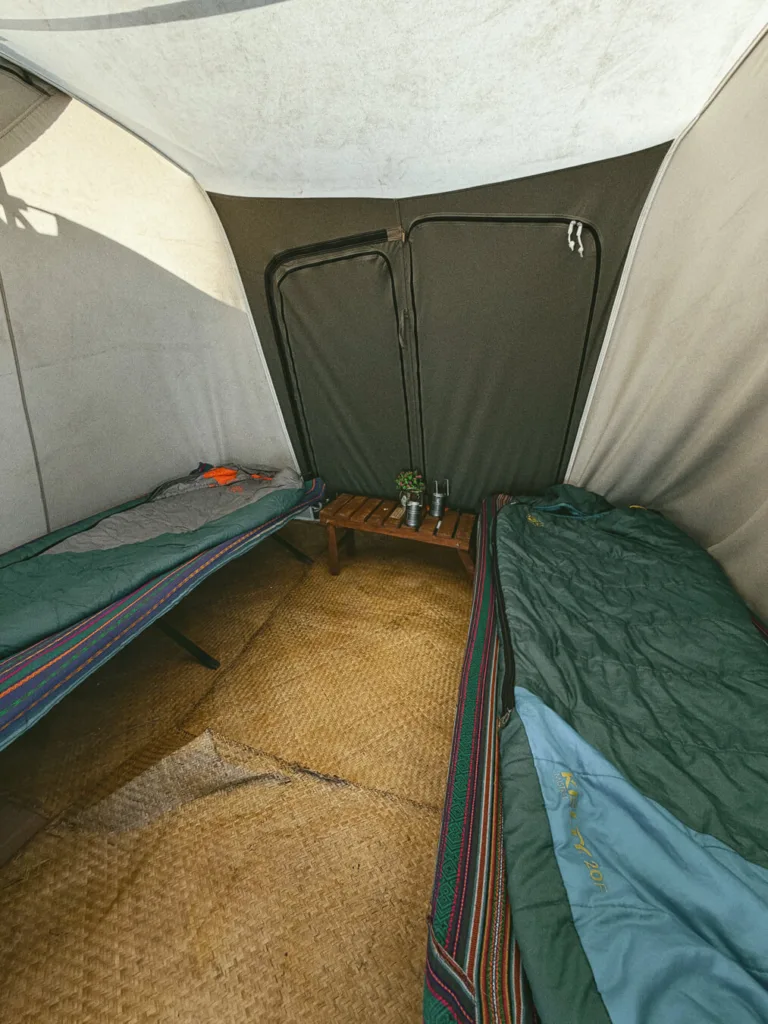
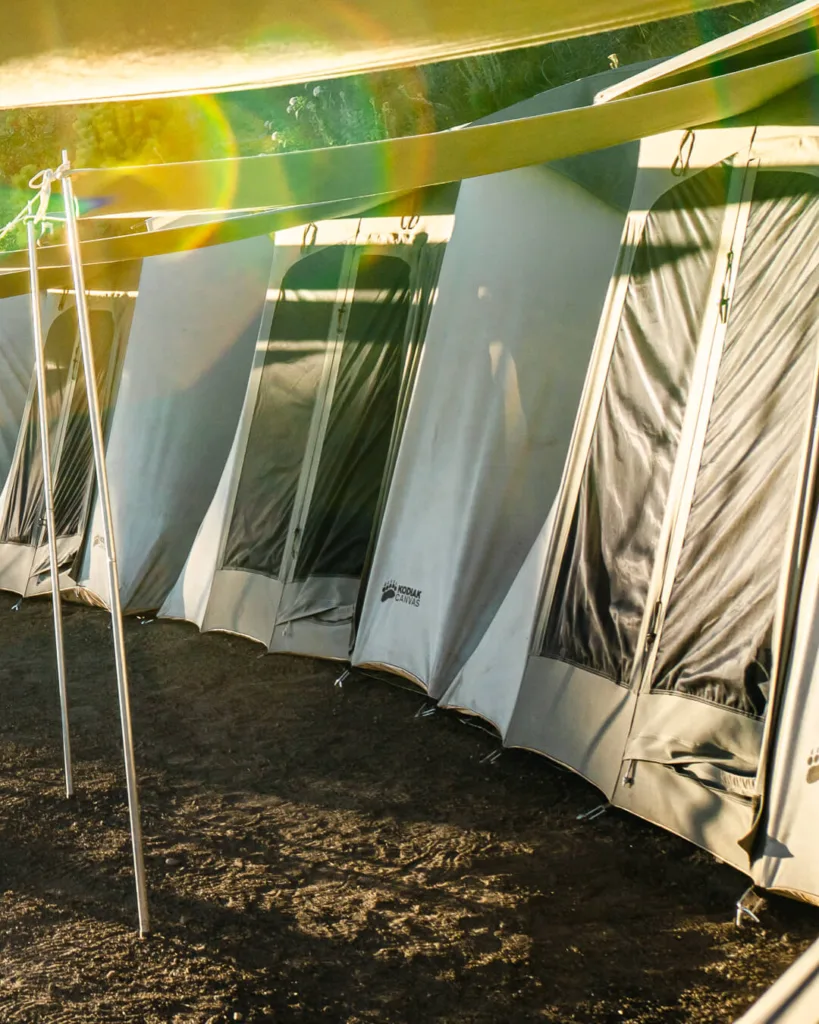
There’s also a shared seating area where everyone gathers in the evening. As temperatures drop quickly after sunset, the guides light a bonfire, creating a surprisingly cozy and social atmosphere in the middle of such a remote landscape. It’s one of those moments where strangers quickly feel like a group, all brought together by the same experience.
The campsite also had a portable toilet, just in case you are wondering.
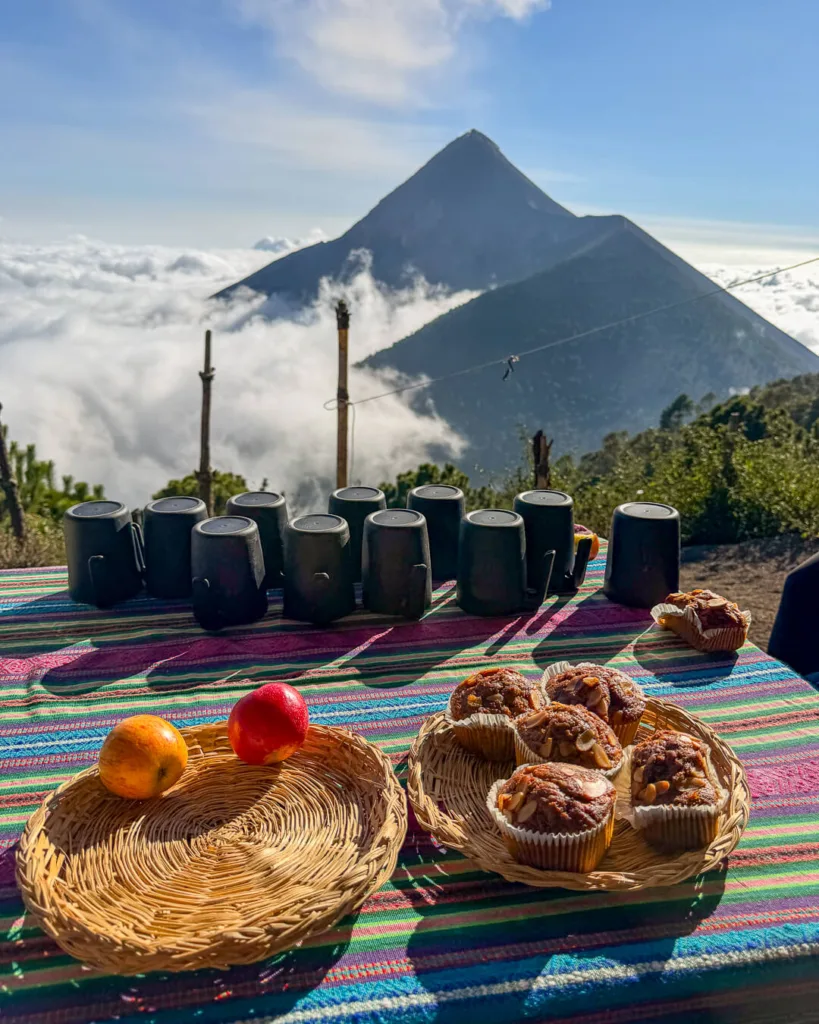
As soon as we reached base camp, we were welcomed with freshly baked banana bread and a hot beverage — and I still think about that moment. Sitting there, slightly tired but excited, holding something warm while looking at the volcano… it felt surreal.
And then, out of nowhere, it happened.
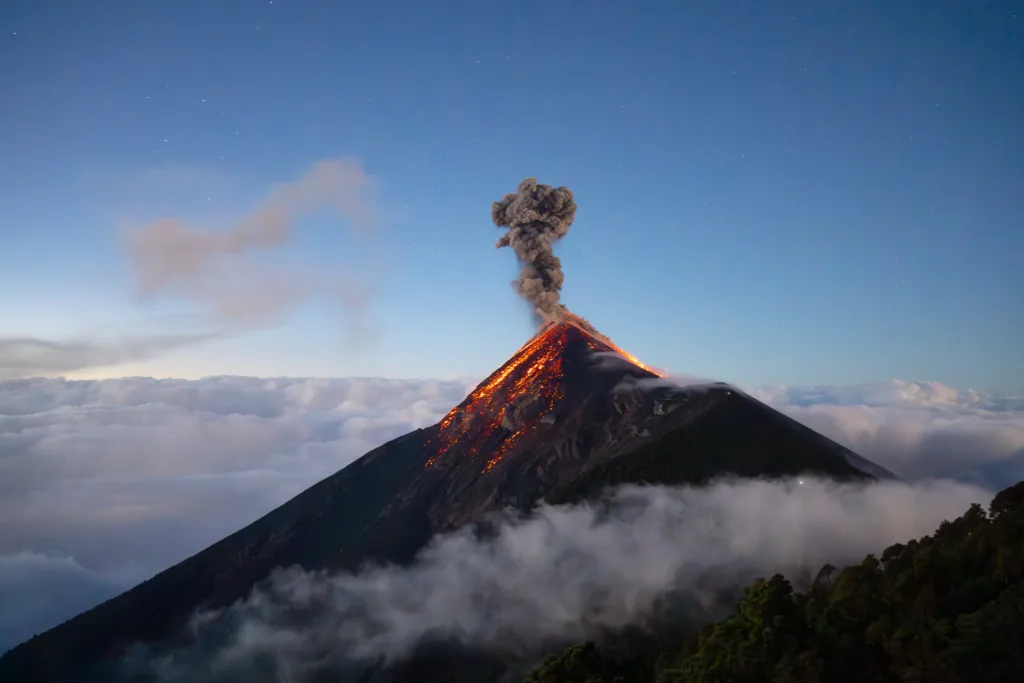
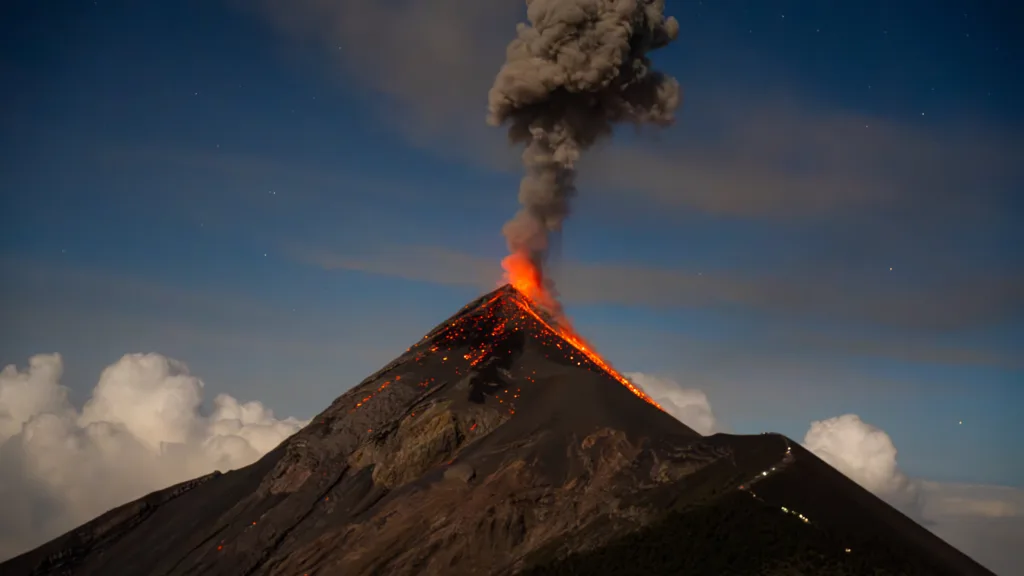
We were casually enjoying our snacks when suddenly everyone around us started reacting — “oh my god!” — and we looked up to see a massive eruption. A huge cloud of smoke shot into the sky. That was my first glimpse of Fuego erupting, and it was such a powerful moment.
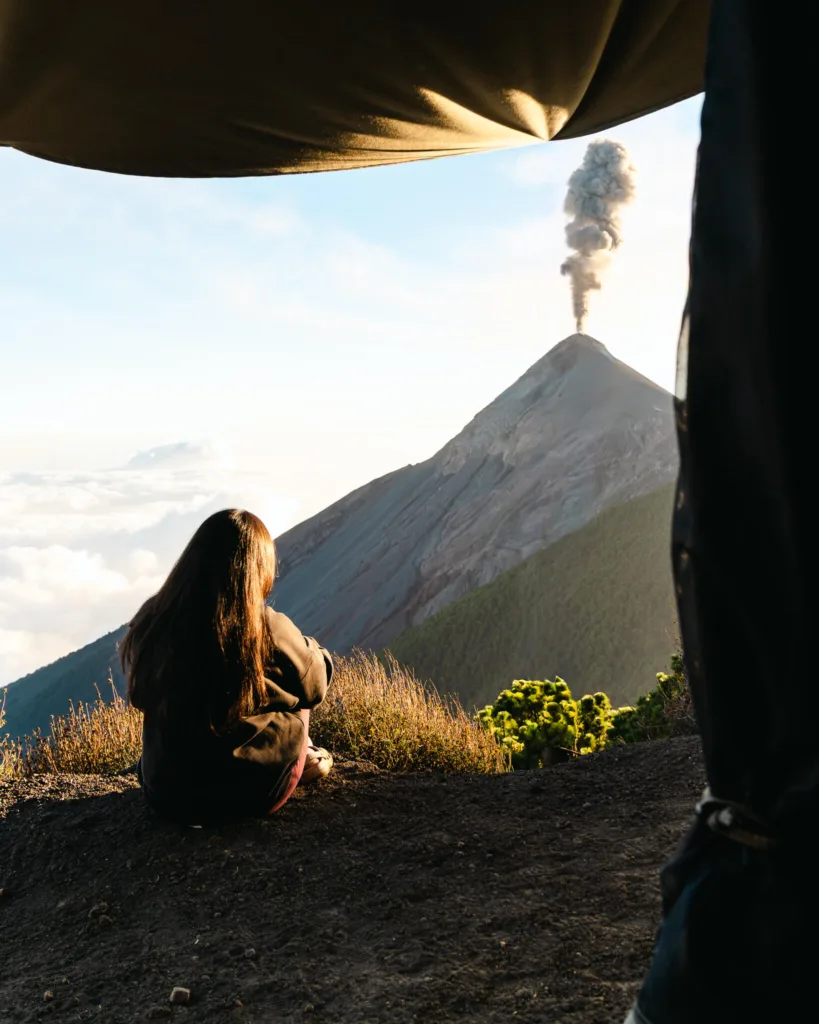
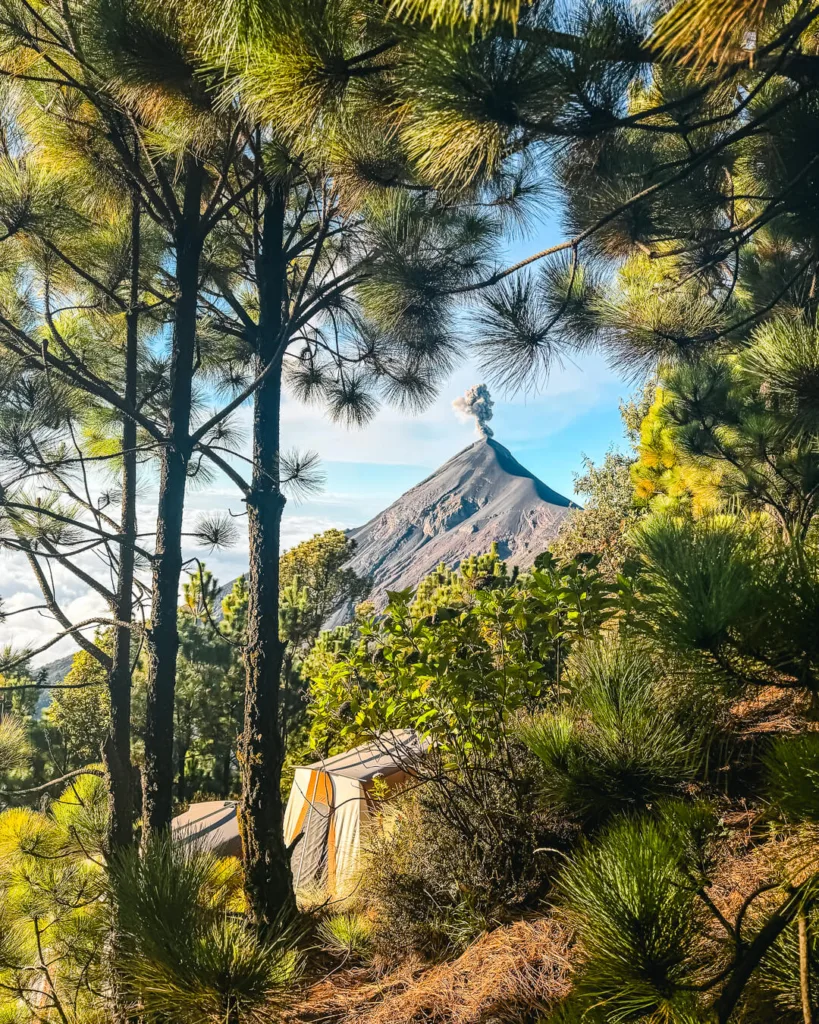
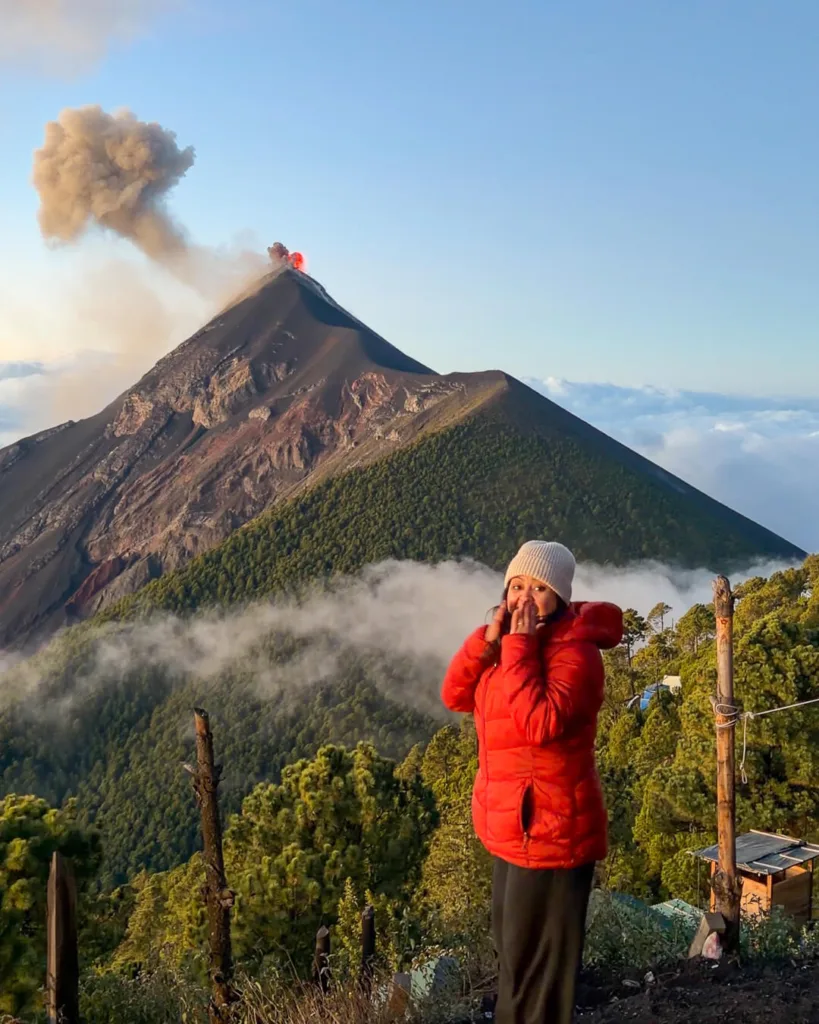
At first, most eruptions looked like thick smoke rising into the air. But everything changed after sunset.
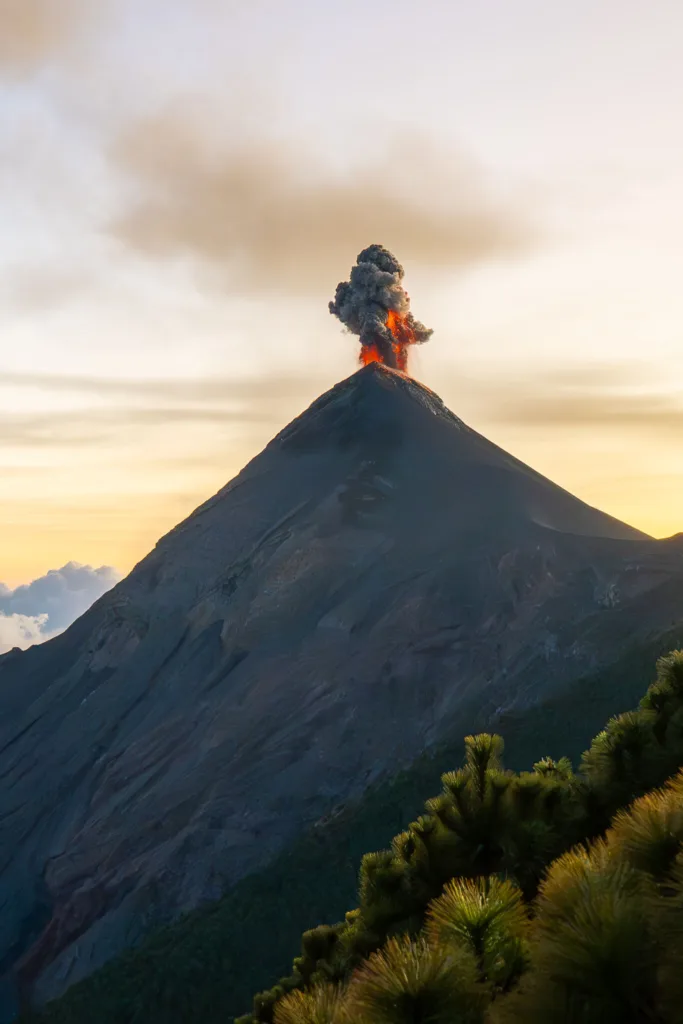
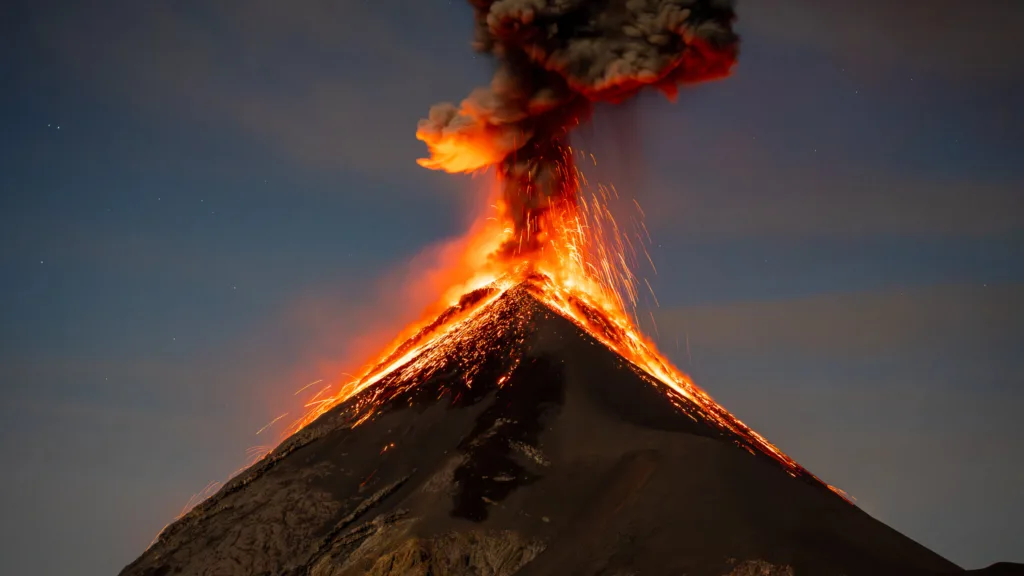
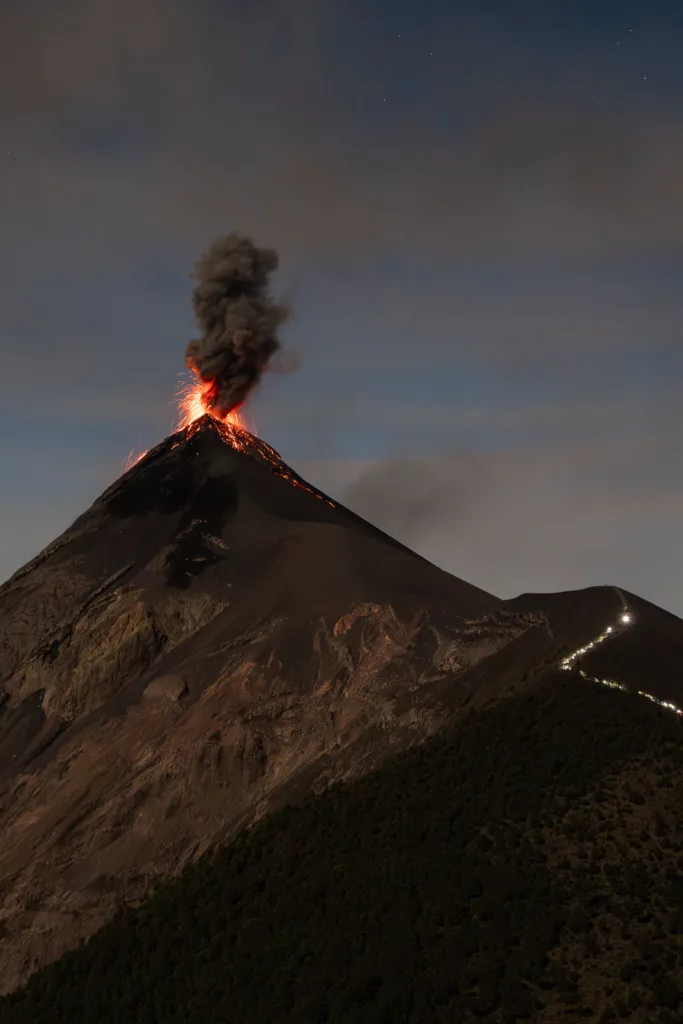
Once it got dark, we could clearly see lava lighting up the sky with every eruption. That was the moment it truly hit me. Watching glowing lava burst into the night sky is something I will never forget. This is exactly why the Fuego volcano views from Acatenango are so famous — it’s not just scenic, it’s an experience.
Night at the Basecamp
We spent the evening at base camp enjoying a warm dinner — I had a chicken-based meal, and they also had vegan options available, which is great for different dietary preferences. As the night got colder, we were served hot chocolate, and that honestly made the whole experience even better.
The night itself was magical and intense at the same time. From our tents, we could hear eruptions in the distance. We stayed up pretty late, waiting and watching, trying to capture the perfect shot despite the cold. It was freezing, but no one wanted to miss a single moment. It’s such a different experience — sitting in silence, surrounded by mountains, while an active volcano keeps erupting in the background.
Sunrise Experience
The next morning didn’t go exactly as planned. We were supposed to wake up early for the summit hike to catch the sunrise, but when we woke up around 4 AM, the weather conditions were not safe. It was windy and even rainy, and our guide decided to cancel the hike. Honestly, it was such a bummer. I had really been looking forward to that moment.
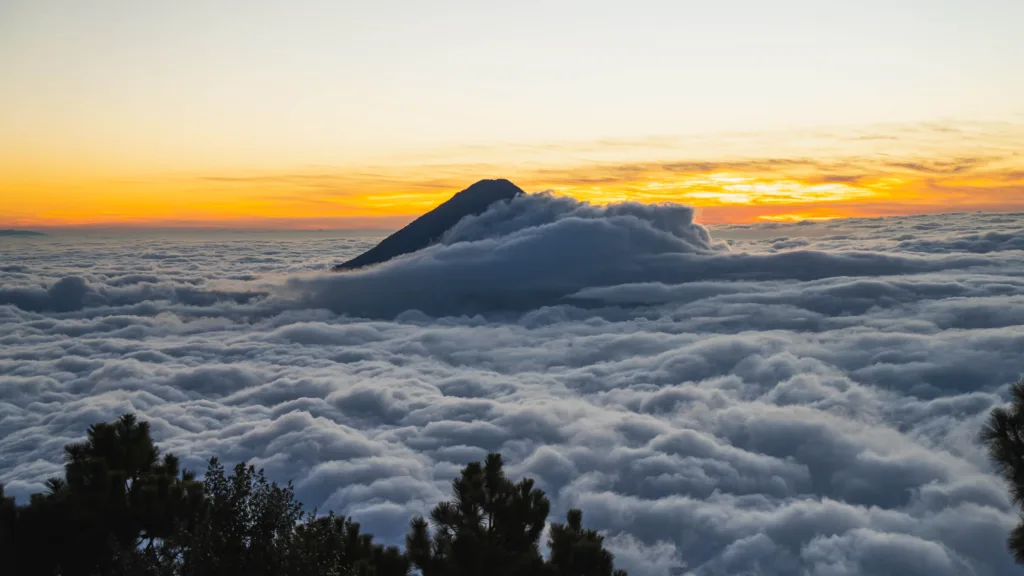
Instead, we watched the sunrise from base camp while having breakfast — oatmeal and hot beverages. And even though it wasn’t the original plan, it turned out to be a beautiful experience. The sky slowly changed colors, clouds drifted below us, and everything felt calm and peaceful.
Back to Antigua
After breakfast, we packed up our things and began heading back. The short hike down felt much easier, and soon we were back in the 4×4 for the ride down to Antigua.
If you want to see what the entire experience actually looks like, from the 4×4 ride to watching Volcán de Fuego erupt at night, you can watch the full video on my YouTube.
Fuego Volcano Hike from Base Camp (Optional)
One thing you’ll hear a lot about during the Acatenango overnight tour is the option to hike closer to Fuego Volcano from base camp.
This is an additional hike that you can choose to do once you reach base camp, and it’s usually around a 4-hour round trip. The goal is to get much closer to Fuego and experience the eruptions from a more intense and up-close perspective.
It’s important to know that this hike costs extra and, in most cases, you need to decide at the beginning of the tour whether you want to do it. So it’s a good idea to think about this in advance rather than deciding last minute.
But here’s the honest truth — this hike is not easy.
Even though you’ve taken the Acatenango 4×4 tour and avoided most of the main hike, this part is still physically demanding. The trail is steep, the terrain is loose, and the altitude makes it even harder. By the time you reach base camp, your body is already adjusting to the elevation, so adding another challenging hike can feel intense.
For me personally, I chose not to do the Fuego hike. I don’t do very well at high altitude, and the idea of doing a strenuous hike on top of that didn’t feel right for my body.
If you’re someone who loves a physical challenge, wants to get as close as possible to the eruptions, and feels confident hiking at high altitude, then the Fuego hike can be an incredible addition to your experience. I would encourage you to do the Fuego if you took 4X4 for the entire hike and saved the energy.
But if your goal is to enjoy the experience without pushing yourself too hard, staying at base camp is honestly just as rewarding.
From base camp, you already get incredible Fuego volcano views from Acatenango. You can clearly see eruptions, especially after sunset when lava lights up the sky. And the best part is — you can enjoy all of this while staying warm, relaxed, and fully present.
For me, sitting at base camp, watching eruptions under the night sky, and soaking it all in felt more than enough.
How to Book the Acatenango 4×4 Tour
If you’re planning an Acatenango overnight tour, I highly recommend booking in advance, especially during peak travel months when spots fill up quickly.
Many people choose to book through platforms like Tripadvisor, GetYourGuide, and Viator. These platforms make it easy to compare different tour operators, read reviews, and secure your spot in advance.
One big advantage of booking through these platforms is flexibility. Many listings offer free or last-minute cancellation, which can be incredibly helpful if your plans change or if weather conditions aren’t ideal.
Another bonus is that these platforms often work well with travel credit cards and cashback portals , which means you can earn points or get some value back on your booking. f you’re new to cashback portals, you can start with Rakuten using my link and earn an additional 5,000 Amex points after your first qualifying purchase.
That said, I personally booked this tour online directly with the tour company, and it worked out great mainly because I found a more affordable option this way.
If you’re trying to make the most of your booking, here are a few simple tips that helped me:
- Use a travel credit card → Cards like Capital One often earn more than 1x points on purchases, so you can maximize rewards on your booking.
- Check cashback or points portals → If you’re booking through platforms like GetYourGuide or Viator, see if your card or portal offers additional cashback.
- Compare direct vs platform pricing → Direct booking can sometimes be cheaper, but platforms offer added flexibility like free cancellations.
How much does the Acatenango overnight 4×4 tour cost?
Prices vary depending on the tour operator and the style of experience you choose. To give you a real benchmark: Trek Guatemala, the operator I booked with lists the Acatenango 4×4 Overnight: Comfort Glamping from $409 per person (small group). For comparison, their standard overnight hike (no 4×4) starts from $169 per person for small group tour with comfort camping.
Yes, the 4×4 option is expensive but that price includes bilingual guides, meals, camping equipment, entrance fees, and round-trip transportation from Antigua. And since pricing is tiered (more guests = lower per-person cost), joining a group tour date can bring that number down.
In my case, once five others joined the tour on my prefered date, the final cost came down which made it feel much more reasonable for the experience.
I’ve also seen many tour companies offer the standard overnight hike (without the 4×4) for around $90–$100 per person with english guide. The price usually depends on the group size — larger groups tend to be more budget-friendly, while smaller or private tours come at a higher cost.
So when planning your Acatenango hike, it really comes down to your comfort level with group size and the kind of experience you’re looking for.
Acatenango 4×4 Tour: What to Know Before You Book
Before you finalize your Acatenango overnight tour, here are a few important things I would suggest to consider:
Check what’s included in the tour
Not all tours are the same. Some include meals, tents, sleeping arrangements, and gear, while others may charge extra. I recommend confirming that everything, especially tents and meals is included so you don’t have to worry about logistics.
Also, make sure to confirm whether your guide is English-speaking or bilingual, depending on your preference.
Confirm the 4×4 route details
Make sure the tour clearly mentions how much of the hike is covered by 4×4. Most tours cover about 70–80%, but it’s always good to confirm so you know what to expect.
Understand group size and pricing
Since the 4×4 cost is often shared, the number of people in your group can impact your price. If you’re flexible with dates, you might be able to join a larger group and reduce your cost.
Ask about cancellation and weather policies
Weather plays a big role in this experience. It’s helpful to know what happens if conditions aren’t safe — like in our case when the sunrise hike was canceled. Platforms like GetYourGuide or Viator often offer more flexible cancellation options
Acatenango Overnight 4×4 group tour option to check out 👇🏼
What to Pack for the Acatenango Overnight 4×4 Tour?
Even though the Acatenango 4×4 tour makes the journey easier, you’re still going up to around 12,000 feet, where the weather changes quickly and temperatures drop significantly at night. Based on my experience, here’s exactly what you should pack to stay comfortable and enjoy the experience fully.
🧥Warm Layers Are Essential
The most important thing to pack for the Acatenango overnight tour is warm clothing. During the day, it might feel pleasant while hiking, but once the sun sets, the temperature drops fast and it gets really cold. I highly recommend carrying a warm insulated jacket, thermals, woolen gloves or mobile friendly winter gloves, and a beanie. I personally underestimated the cold, and I was so glad I had extra layers, especially while sitting at base camp watching eruptions late into the night.
👟 Wear Proper Hiking Shoes
Even with the Acatenango 4×4 tour, you still need to hike the final stretch to base camp, which takes about an hour. The trail is uphill and can be rocky or dusty, so having good hiking shoes with proper grip makes a big difference. Avoid regular sneakers without traction, as they can make the hike uncomfortable and slippery.
🎒Carry a Small, Light Backpack
Since you’re not doing the full hike, you don’t need to carry a heavy bag. A small backpack is perfect for essentials like water, snacks, extra layers, and your camera. Keeping your bag light will make the final hike much easier and more enjoyable.
You can also hire a porter for an additional cost if you’re carrying extra gear or don’t want to carry everything yourself.
💧Stay Hydrated and Bring Snacks
Most Acatenango overnight tours include meals, but it’s still important to carry your own water and a few snacks. I recommend bringing at least 1-2 liters of water per person (You need to stay hydrated at that kind of altitute) along with energy bars or light snacks. Even with the easier Acatenango without hiking fully option, the altitude can make you feel tired, so staying hydrated really helps.
Just you know there is no water filling station at basecamp, you will mostly rely on the water you bring.
📸 Don’t Forget Your Camera Gear
One thing you definitely don’t want to miss is capturing the experience. Watching Fuego volcano erupt from Acatenango is something you’ll remember forever, and having good photos or videos makes it even better.
If you enjoy photography, bring a camera with good low-light performance, extra batteries (because the cold drains them quickly), and a tripod for night shots. I stayed up late trying to capture eruptions, and it was absolutely worth it. (you can read more on this below)
🔦 Headlamp or Flashlight Helps a Lot
Even though you’re not doing the full hike, a headlamp or flashlight is very useful. It helps you move around the campsite at night and is especially handy in the early morning when visibility is low. It’s a small item that makes a big difference.
🧴 Sun Protection Is Important
At higher altitudes, the sun can be surprisingly strong during the day. Even if it doesn’t feel hot, you can still get sunburned. Carry sunscreen and sunglasses to protect yourself while hiking and spending time at base camp.
😷 Face Cover for Dust (Optional)
The trail and 4×4 ride can get dusty, especially in dry conditions and you are sitting back of the open jeep. A face cover or buff can be helpful if you’re sensitive to dust or just want extra comfort during the ride.
🧦 Extra Socks Make a Difference
This might sound small, but it really matters. Having an extra pair of warm socks for the night can make you much more comfortable, especially when temperatures drop. Cold feet at base camp are not fun.
🔋 Carry a Power Bank
One thing many people don’t think about is how quickly your phone battery drains in the cold. Between taking photos, videos, and just being out in low temperatures, your battery will run out faster than usual. A power bank is a simple but essential item to pack.
Acatenango Volcano Photography Tips
The best time for photography is after sunset and around sunrise. After sunset, you can clearly see Fuego Volcano erupting with glowing lava, while sunrise offers softer light and beautiful cloud views.
When we first arrived in the afternoon, most eruptions looked like smoke. But once it got dark, everything changed — you could see lava lighting up the sky with every eruption. That’s when the magic really happens.
We ended up staying up pretty late, even in the cold, trying to capture the perfect shot. Every eruption felt different, which made it hard to stop watching, or shooting.
That said, photographing Fuego is not as easy as it looks. One of the biggest challenges is focus. Trying to get accurate focus on a dark volcano against a dark sky can be tricky, especially if you’re not used to night photography. It takes a bit of trial and error to get it right.
Another tricky part is timing. You never know when Fuego is going to erupt, and when it does, you only have a few seconds to capture the moment before it fades again. That unpredictability makes it exciting, but also a bit frustrating if you’re chasing the perfect shot.
If you’re using a camera or phone, a tripod is essential, especially for night photography. To avoid shaking the shot, use a remote trigger or your Apple Watch to click photos instead of clicking. It makes a big difference in getting sharper images.
Also, keep in mind that the cold drains your battery quickly, so carrying extra batteries or a power bank is essential.
Want to Capture This Experience the Right Way?
This guide might help you..
Capture the Eruption: A Beginner’s Guide to Photographing Fuego Volcano at Night
I made a guide so you don’t have to figure out your camera settings in the dark while lava is literally shooting into the sky. Everything I wish I knew as well as the exact settings I used, real before/after editing examples, and a cheat sheet you can screenshot before your hike.
But my biggest advice? Before you reach for your camera or phone, take a moment to just watch it with your own eyes. The sound, the glow, the feeling of being there. It’s something a photo can never fully capture.
Is the Acatenango Overnight 4×4 Tour Worth It in 2026?
If you’re wondering “is Acatenango worth it?” — the short answer is yes… 100% yes. But the real question is whether the Acatenango overnight 4×4 tour is the right way to do it.
Based on my experience, this was one of the most unique and unforgettable things I’ve ever done while traveling. Watching an active volcano erupt right in front of you, spending a night above the clouds, and waking up to views that don’t feel real — it’s something you truly have to experience to understand.
What makes the Acatenango 4×4 tour worth it is the balance it offers. You still get the full experience — the base camp stay, the incredible Fuego volcano views from Acatenango, the night eruptions — but without the extreme physical effort of a full hike.
And this is something I didn’t fully realize until I got there.
I spoke to multiple people who did the full Acatenango hike, and almost everyone said the same thing — it’s very tough. Hiking up to around 12,000 feet is physically demanding, and altitude makes it even harder. Hearing their experiences made me even more confident that choosing the Acatenango without hiking the entire way option was the right decision for me.
The 4×4 option allowed me to actually enjoy the experience instead of just focusing on getting through a difficult hike. I had the energy to sit, relax, and fully take in the eruptions, which honestly is the highlight of the entire experience.
Another reason why this is worth it is the overnight stay itself. Spending a night at base camp, sitting around a bonfire, drinking hot chocolate, and watching lava burst into the sky — it’s something that feels almost unreal. It’s not just a hike, it’s an experience.
However, one important thing to know is that the Acatenango overnight 4×4 tour is more expensive compared to the regular hike.
The cost is higher because of the vehicle access and logistics involved in getting you up the mountain. But there’s also a bit of flexibility here — the price can sometimes come down depending on how many people are sharing the 4×4 that day.
In my case, I got lucky. There were five other people joining the same 4×4, which helped distribute the cost and made it feel much more reasonable. So if you’re considering this option, it’s worth checking with your tour provider about group size and pricing.
That said, it’s important to set the right expectations.
This is still not a luxury experience. The campsite is basic, the temperatures are cold, and weather can change your plans — like it did for us when our sunrise hike got canceled. In that moment, it was honestly a bummer because I was really looking forward to it.
So, is the Acatenango overnight 4×4 tour worth it?
If you want:
- A more accessible way to experience Acatenango
- Incredible views of an active volcano
- A once-in-a-lifetime overnight adventure
Then yes, it’s absolutely worth it — even if it costs a bit more. For me, it was the perfect balance of adventure and comfort, and I wouldn’t change a thing.
Acclimatization & Altitude: What You Should Know
One important thing to keep in mind when planning the Acatenango overnight tour is the altitude. Base camp sits at around ~11,000 ft, and even with the Acatenango 4×4 tour, your body still needs time to adjust. If you’re coming from sea level, you may experience shortness of breath, mild headaches, or fatigue. This is completely normal, but it’s something to be aware of.
Personally, I didn’t want to push myself too hard at high altitude, which is also one of the reasons I skipped the optional Fuego hike. I don’t do very well at high altitude, and adding a strenuous hike on top of that didn’t feel like the right decision for me. Instead, I focused on enjoying the base camp experience, which was already incredible.
To make your experience more comfortable, it helps to spend at least one night in Antigua before your tour so your body can adjust slightly. Most importantly, listen to your body and don’t push yourself too hard.
FAQ : Acatenango Overnight 4×4 Tour
Can you do Acatenango without hiking the full way?
Yes, you absolutely can. The Acatenango 4×4 tour is a great option if you don’t want to do the full hike. The 4×4 takes you up about 80% of the way, and you only need to hike the final stretch (around 1 hour) to reach base camp. It’s the perfect option for anyone looking to experience Acatenango without hiking the entire way.
How cold does it get overnight on Acatenango?
It gets really cold — especially after sunset. Since you’re at high altitude (around 12,000 ft), temperatures drop quickly and it can feel freezing at night. When I did the Acatenango overnight tour, I had to layer up with a warm jacket, thermals, gloves, and a beanie. Sitting at base camp watching eruptions is amazing, but you’ll only enjoy it if you’re warm.
How much does the Acatenango overnight tour cost?
The cost of the Acatenango overnight tour varies depending on the option you choose. The traditional hike is cheaper, while the Acatenango 4×4 tour is more expensive because of the vehicle access. However, the cost can come down if more people are sharing the 4×4. In my case, there were five other people in the group, which made it more affordable.
Is Acatenango safe to visit?
Yes, Acatenango is generally safe to visit when you go with a guided tour, which is the most common way to do it. Tour companies monitor weather conditions and safety closely. For example, our sunrise hike was canceled because of unsafe weather, which shows that safety is taken seriously. As long as you follow your guide’s instructions, the experience is safe.
Can you see Fuego erupting from Acatenango?
Yes — and this is the highlight of the entire experience. From base camp, you get incredible Fuego volcano views from Acatenango. You can clearly see eruptions, especially after sunset when lava lights up the sky. You don’t need to do the extra Fuego hike to enjoy this view.
Do you need to be fit to do the Acatenango tour?
If you’re doing the full hike, you need a good level of fitness because it’s physically demanding and at high altitude. However, if you choose the Acatenango overnight 4×4 tour, it’s much more manageable. You still need to hike a short distance, but it’s doable for most people as long as you take it slow and stay hydrated.
Final Thoughts
Seeing an active volcano erupt in real time is truly a once-in-a-lifetime experience, and in my opinion, the Acatenango overnight 4×4 tour is one of the best ways to experience it without pushing your limits.
From skipping the intense 5–6 hour uphill hike to having everything organized for you — transportation, tents, meals, and guides — this option takes away the stress and lets you focus on what really matters: watching Fuego Volcano erupt under the night sky.
For me, it was the highlight of my Guatemala trip… and something I’ll remember forever.